Pour Decisions? Why Your Favorite Beer Bar Just Started Brewing Its Own
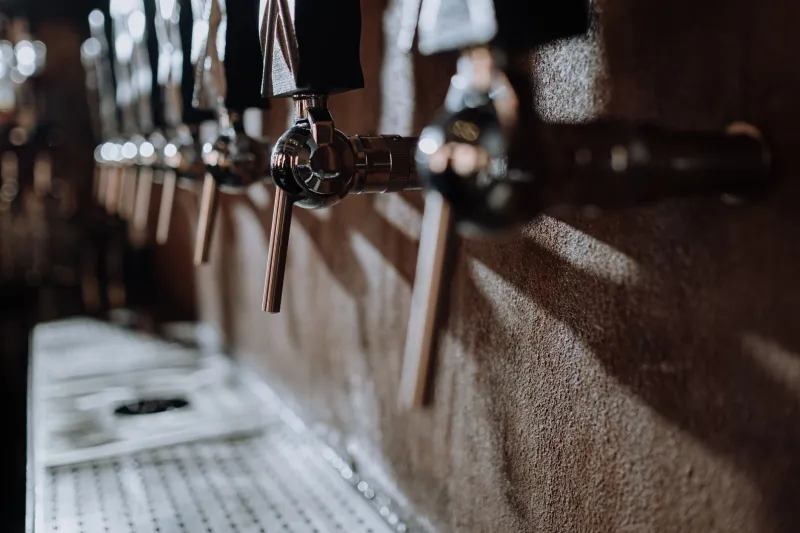
Walk into a certain kind of craft beer bar and you'll notice something a little different these days. Past the taps, beyond the chalkboard beer list, there's a stainless steel tank visible through a glass partition. Or maybe the bartender casually mentions that the hazy IPA on the end of the handle was brewed in the back room last Thursday. Or there's a small sign near the door: Brewed Here.
It's not a coincidence. All across the US, independent craft beer bars are quietly crossing a line that once seemed firmly drawn — from curators of other people's beer to actual producers of their own. The taproom-brewery hybrid is having a real moment, and the reasons behind it say a lot about where craft beer culture is right now.
The Curation Game Gets Crowded
For a long time, being a great craft beer bar meant having exceptional taste. You sourced the hard-to-find stuff, built relationships with regional breweries, and kept your taps rotating with enough variety to keep enthusiasts coming back. That was the competitive edge.
The problem? That edge has gotten a lot harder to maintain. The number of craft breweries in the US has exploded — the Brewers Association counted over 9,000 operating craft breweries as of recent years — and many of them are opening their own taprooms, selling direct to customers and keeping their most exciting releases in-house. The supply chain for rare and sought-after craft beer has gotten more complicated, and the margins on distributor-sourced beer have stayed stubbornly thin.
Opening a small brewing operation flips that equation. Suddenly the bar has something nobody else on the block can pour: its own beer. That's a differentiator that can't be copied by the place down the street.
A Tale of Two Models: What This Actually Looks Like
The hybrid bar-brewery model isn't one-size-fits-all. It shows up in pretty different forms depending on the market, the space, and the ambition of the owners.
In some cases, it's a modest nano-brewery setup — a one or two-barrel system tucked into a back room or basement, producing small batches that rotate on a handful of dedicated house taps. The bar still carries a full lineup of guest beers from regional and national craft producers, but the house brews add an exclusive draw. This is the low-overhead entry point, and it's where a lot of bars start.
Other operations go bigger. In cities like Denver, Asheville, and Chicago — places with deeply embedded craft beer cultures — some bars have invested in full microbrewery setups, hiring dedicated brewers and producing enough volume to make the brewing operation a genuine revenue center rather than just a marketing hook. A few have even started packaging and distributing their house beers locally, effectively becoming breweries that happen to have a great bar attached.
Then there's the brewpub model, which has existed for decades but is seeing renewed energy. The classic American brewpub — food, house beer, neighborhood vibes — fell out of fashion for a while as standalone taprooms became the cool new thing. It's coming back, reframed and refreshed for a generation of drinkers who want the full experience in one place.
What It Takes to Make the Jump
Anyone who's talked to a bar owner who's added brewing to their operation will tell you the same thing: it's harder than it looks. The regulatory landscape alone is enough to give you pause. Most states treat a bar license and a brewery license as distinct categories with distinct requirements, meaning operators have to navigate two sets of rules simultaneously — and those rules don't always play nicely together.
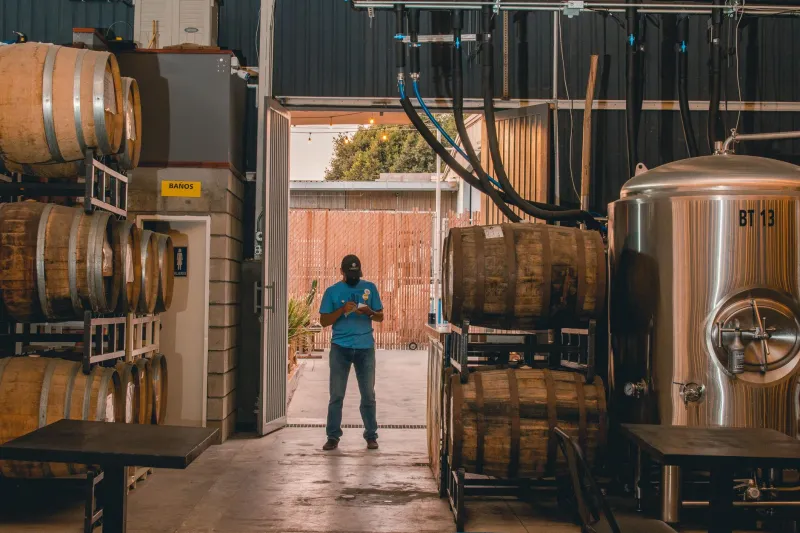
Space is the other major constraint. A functional brewing setup needs room for tanks, a grain storage area, a cold room for conditioning, and drainage infrastructure that most bar buildouts never anticipated. Retrofitting an existing space is expensive and complicated. Some bars have solved this creatively — converting adjacent retail space, building out underused basements, or working with landlords on expansions. Others have moved entirely, choosing new locations specifically because the floor plan could accommodate both functions.
Staffing adds another layer. Running a bar and running a brewery require genuinely different skill sets. Bars that have made this work successfully tend to either hire a dedicated brewer from outside or promote from within — finding someone on the existing team with homebrewing experience and the drive to go professional.
"You can't just bolt a brewery onto a bar and expect it to run itself," said the co-owner of one Midwest craft bar that made the transition three years ago. "The brewing operation needs its own attention, its own schedule, its own person. Once we got that right, everything else started clicking."
What Drinkers Actually Get Out of It
From a customer's perspective, the appeal is pretty straightforward: you get more. More exclusivity, more freshness, more story.
House-brewed beer is inherently local in the most immediate sense possible — it was made in this building, possibly this week. That resonates with craft drinkers who care about provenance and want to feel connected to what they're drinking. It also means the bar can experiment in ways that a commercial brewery shipping to multiple accounts can't. Small batches, seasonal ingredients, weird one-offs that are here today and gone next week — that kind of programming keeps regulars engaged and gives them a reason to keep showing up.
There's also the education angle. Bars that brew tend to create more conversations about beer. Staff are more invested in talking through the flavor profile of the house IPA because they watched it get made. Customers ask questions. Tap takeovers become collaborative events. The whole bar gets a little more interesting.
The Bigger Picture
The rise of the bar-brewery hybrid reflects something genuine about where craft beer culture is heading. The lines between producer and retailer, between brewer and bartender, are blurring in interesting ways. Drinkers aren't just looking for great beer — they want an experience, a connection, a place that feels like it has a real identity.
Building a brewery inside a bar is one very concrete way to establish that identity. It's a commitment that says: we're not just selling you other people's work. We're invested enough in this to make something ourselves.
Whether it's a humble two-barrel system producing 20 kegs a month or a full-scale micro operation with canning capabilities, the statement is the same. And honestly? That's exactly the kind of thing that makes the craft beer world worth celebrating.