Beyond the Obvious: How Craft Brewers and Chefs Are Rewriting the Rules of Beer and Food
For a long time, beer and food pairing meant one thing: grab a cold lager with your burger and call it a day. Even as craft beer exploded in complexity and ambition over the last two decades, the food pairing conversation lagged behind. You'd hear the same suggestions recycled at every taproom—IPAs cut through spice, stouts love chocolate, wheat beers belong next to salads. Safe. Sensible. Kind of boring.
But something has quietly shifted. Across the country, a growing number of craft breweries are blowing up that rulebook entirely, pulling in professional chefs, food scientists, and even fermentation nerds to build culinary experiences that treat beer the same way a sommelier treats a great Burgundy. The results are genuinely surprising—and in some cases, kind of mind-bending.
When the Kitchen Moves Into the Taproom
It used to be that a brewery's food program meant a rotating food truck parked out front. That's changing fast. More breweries are investing in full kitchens staffed by chefs who aren't just cooking around the beer—they're cooking with it, treating each house brew as a core ingredient rather than an afterthought on the menu.
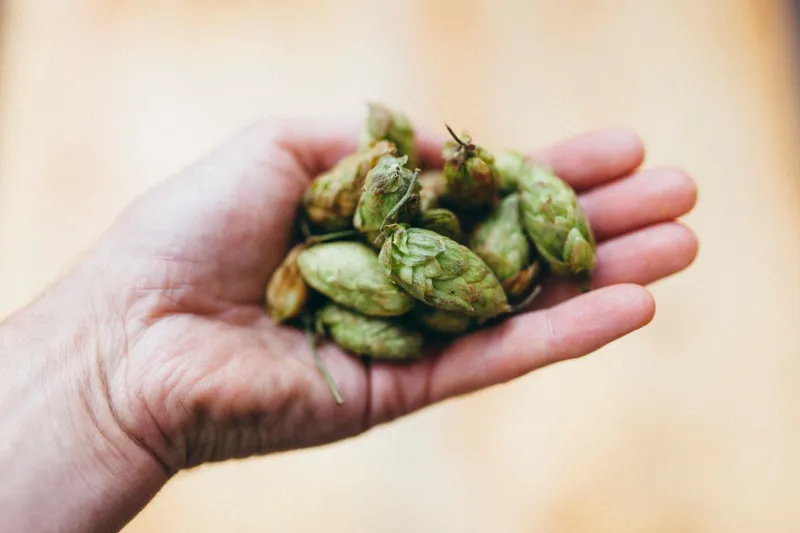
At places like Weldwerks Brewing in Greeley, Colorado, and Allagash Brewing in Portland, Maine, the line between the brew kettle and the sauté pan has gotten genuinely blurry. Spent grain shows up in bread and pasta dough. Beer-based broths anchor braised dishes. Hop oils get folded into vinaigrettes. The brewery's flavor identity doesn't just live in the glass anymore—it runs through the entire dining experience.
This kind of integration requires something most breweries haven't traditionally prioritized: real dialogue between the brewer and the cook. When a head brewer sits down with a chef and starts talking about the ester profile of a Belgian tripel or the way a specific hop variety leaves a resinous finish, the culinary possibilities multiply quickly.
Fermentation as a Shared Language
One of the most exciting developments in this space is the growing overlap between brewing fermentation and culinary fermentation. Chefs who already work with kimchi, miso, sourdough, and kombucha are finding that craft brewers speak a deeply familiar language—one built around microbes, time, and transformation.
That shared vocabulary has opened some genuinely unexpected doors. Breweries experimenting with mixed-fermentation and wild ales—the kinds of beers that carry funky, acidic, barnyard-adjacent flavors—are discovering that their brews pair beautifully with aged cheeses, cured meats, and fermented vegetables in ways that wine pairings can't quite replicate. The acidity in a well-made Berliner Weisse or Lambic-style ale can do the same work as a squeeze of lemon on raw oysters. A funky saison can cut through the richness of a charcuterie board better than most white wines on the market.
Some breweries are taking this even further, building collaborative fermentation programs where the brewery's house yeast strains are handed off to kitchen staff to experiment with. Imagine a sourdough starter fed with the same wild yeast that ferments your favorite barrel-aged sour. That's not a hypothetical—it's happening in tasting rooms from Vermont to California.
Molecular Gastronomy Meets the Pint Glass
At the more avant-garde end of the spectrum, a handful of brewery kitchens are flirting with molecular gastronomy techniques to reimagine what beer pairing even means. We're talking beer gels, hop-infused foams, malt-derived caramels, and spherified beer drops designed to burst on the palate alongside a specific dish.
It sounds like a lot—and honestly, it can be. But when it's done thoughtfully, the effect is less gimmick and more revelation. When a single bite of food is engineered to hit the exact same flavor notes as the beer it's served beside, the pairing stops being a suggestion and becomes something almost architectural. The food and the beer aren't just complementary; they're structurally connected.
Chefs working in this space talk about "flavor mapping" a beer before they ever start writing a dish. They'll break a brew down into its primary flavors, secondary notes, mouthfeel characteristics, carbonation level, and finish—essentially building a tasting profile the same way a perfumer maps a fragrance. From there, the dish gets designed to either echo those notes, contrast them, or fill in the gaps the beer leaves open.
Dessert Is Where Things Get Really Interesting
If there's one category where craft beer is genuinely outperforming wine as a pairing partner, it's dessert. Wine struggles with very sweet dishes—high-sugar foods tend to make dry wines taste sour and thin. Beer, with its carbonation, roasted malt complexity, and often lower acidity, handles sweetness with a lot more grace.
Brewers and pastry chefs are leaning into this hard. Imperial stouts with notes of vanilla, coffee, and dark chocolate are being paired with dishes that play into those same flavors—but the really interesting moves come when the pairing goes sideways in a good way. A tart raspberry sour alongside a rich crème brûlée. A smoky rauchbier served with a salted caramel tart. A hazy, tropical double IPA next to a coconut panna cotta. These aren't combinations that would show up in a traditional pairing guide, but they work—sometimes spectacularly.
Some breweries are even building beer-specific tasting menus where dessert courses are designed course-by-course around the brewery's seasonal releases. It's the kind of experience that would have seemed absurdly ambitious ten years ago. Now it's showing up in mid-sized cities across the Midwest and the South, not just the coastal craft beer hubs.
What This Means for the Rest of Us
You don't have to live near a brewery with a Michelin-starred kitchen to benefit from all this experimentation. The bigger takeaway is that the people pushing these boundaries are essentially doing R&D on our behalf—testing ideas, failing, refining, and sharing what they learn through menus, events, and increasingly, online content.
The practical upshot for anyone who loves craft beer: start thinking about your beer the way you think about an ingredient, not just a beverage. What flavors does it carry? What does it do to your palate between bites? Does it clean things up or layer on more richness? Once you start asking those questions, the pairing suggestions you'll come up with on your own will surprise you.
And next time you're at a taproom that takes its food program seriously, ask the staff what's been pairing unexpectedly well lately. Nine times out of ten, the answer will be something you wouldn't have thought to try on your own—and that's exactly the point.
The craft beer world has spent years convincing people that beer deserves the same respect as wine. The kitchen might be where that argument finally gets won for good.