Judged, Scored, and Celebrated: What It Really Takes to Win Gold at America's Craft Beer Competitions
There's a particular kind of quiet tension that settles over a room full of craft brewers the moment the medals get announced. Palms go clammy. Eyes dart toward the stage. A few people suddenly become very interested in their shoes. And then a name gets called, and the room either erupts or exhales — depending on whose name it is.
Craft beer competitions have become one of the most influential forces shaping the American brewing landscape. They launch careers, validate years of experimentation, and — maybe most importantly — tell the rest of us which beers are genuinely worth tracking down. But how do these competitions actually work? What does it take to pour a winner? And what do those gold-medal beers really taste like in the glass?
We dug in.
The Big Stages: Where Reputations Are Made
When most beer lovers think about competitions, the Great American Beer Festival (GABF) in Denver comes to mind first — and for good reason. Organized annually by the Brewers Association, GABF is widely considered the Super Bowl of American craft beer contests. Breweries from all 50 states submit entries across more than 100 style categories, and medals here can change a brewery's trajectory overnight.
But GABF isn't the only game in town. The World Beer Cup, also run by the Brewers Association, draws international entrants and is held every two years. Regional competitions like the US Beer Open, the California State Fair Commercial Craft Beer Competition, and dozens of state-level homebrew contests give smaller breweries — and passionate homebrewers — a legitimate shot at recognition.
Each event has its own culture and judging criteria, but they all share one fundamental goal: identify the best beer in each category, full stop.
Inside the Judging Room
Here's something that surprises a lot of people: competition judging is brutally exhausting work. Certified judges — many of them BJCP (Beer Judge Certification Program) certified — can evaluate upward of 30 to 50 beers in a single session. Everything is blind. No labels, no brewery names, no backstory. Just beer in a glass and a scoresheet.
Judges evaluate on four main fronts: aroma, appearance, flavor, and mouthfeel. Each category carries its own weight, and the scoring isn't just about whether a beer tastes good — it's about whether it tastes correct for its declared style. A hazy IPA that presents with exceptional clarity might actually lose points, even if it's delicious. A German lager that smells like fruit esters is going to struggle, regardless of how smooth it drinks.
"The hardest part isn't identifying a great beer," one experienced BJCP judge told us. "It's staying calibrated when you're on your 40th sample. Palate fatigue is real, and the best judges know how to manage it — water, crackers, mental focus."
Winners aren't just beers that taste good. They're beers that nail their style, show technical precision, and deliver something memorable in every dimension.
What Gold Actually Tastes Like
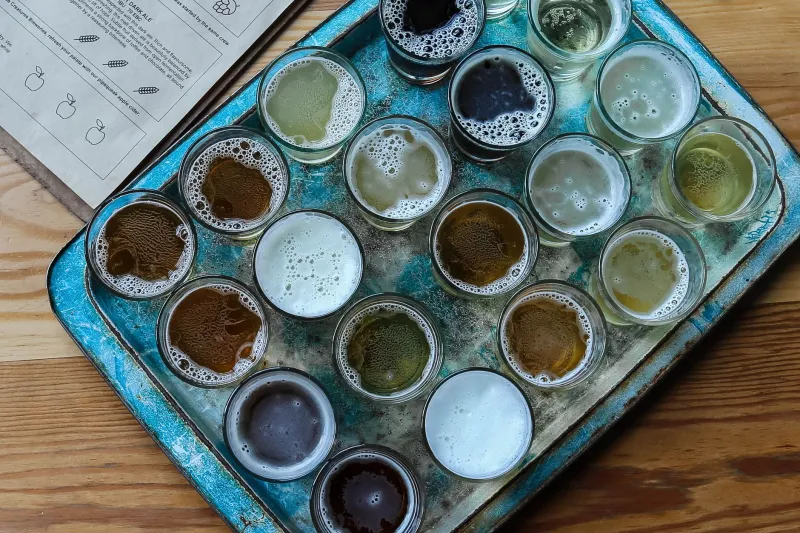
We had the chance to sample several recent competition winners across a range of categories, and a few things stood out immediately.
A gold-medal American IPA from a small Pacific Northwest brewery hit the glass with an aroma that was almost aggressively citrusy — grapefruit peel, fresh tangerine, a whisper of pine underneath. The flavor followed through without apology: bright, resinous, with a bitterness that built gradually and then faded clean. There was no muddiness, no off-note, no rough edge. Just precision.
A winning German-style Märzen from a Midwest brewpub was almost the opposite in character — restrained, malty, with a toasty sweetness that felt like a warm autumn afternoon in a glass. The lager fermentation was flawless; not a hint of sulfur or diacetyl anywhere in the profile. It was the kind of beer that makes you slow down.
And then there was a standout barrel-aged stout from a Colorado brewery that took gold in its category. Dark as midnight, with a nose of vanilla, dark chocolate, and just enough oak to remind you where it spent the last 18 months. The finish lingered in the best possible way.
What all three had in common? Clarity of intention. You could taste exactly what the brewer was going for — and they nailed it.
How Competitions Shape Brewing Trends
It would be easy to dismiss competition culture as insider baseball — something that matters to brewers and judges but not to the average person ordering a pint on a Friday night. But that's not really how it plays out.
When a style category starts generating a lot of medal-winning entries, breweries pay attention. The rise of hazy IPAs, for example, was partly driven by competition results that validated the style's legitimacy at a time when traditionalists were still skeptical. Similarly, the renewed interest in lagers — clean, technically demanding, often underappreciated — has been fueled in part by the respect those beers earn in blind judging environments.
Competitions also push brewers to be more precise. When you know your beer is going to be evaluated against strict style guidelines by people who've tasted thousands of examples, you tend to dial in your process. That discipline has a way of trickling down into everything else a brewery produces.
The Homebrew Pipeline
One of the most exciting things about American craft beer competition culture is how it functions as a launching pad. Many of the country's best-known brewers got their start by winning homebrew competitions — the American Homebrewers Association's National Homebrew Competition being the most prestigious of the amateur-level events.
Winning at that level doesn't just earn bragging rights. It opens doors: invitations to brew professionally, connections with industry mentors, and a proven track record that investors and business partners actually take seriously. The homebrew-to-pro pipeline is real, and competitions are a major part of what makes it flow.
Why It All Matters
Craft beer competitions aren't perfect. Critics point out that style guidelines can sometimes feel restrictive, that blind judging favors technically correct over genuinely innovative, and that smaller breweries without the resources to enter dozens of categories are at a structural disadvantage.
Those are fair points. But at their best, these competitions do something genuinely valuable: they hold the industry to a standard. They reward the brewers who show up every day, obsess over their process, and refuse to cut corners — even when nobody's watching.
And when that gold medal gets announced and a brewer you've never heard of walks up to the stage? That's the craft beer community doing exactly what it does best: finding the great stuff, wherever it's hiding, and making sure the rest of us get a chance to taste it.
Next time you see a competition medal on a tap handle, order that pint. Somebody worked really hard to put it there.