More Than a Store: How Independent Beer Shops Are Becoming the Coolest Hangout Spots in Town
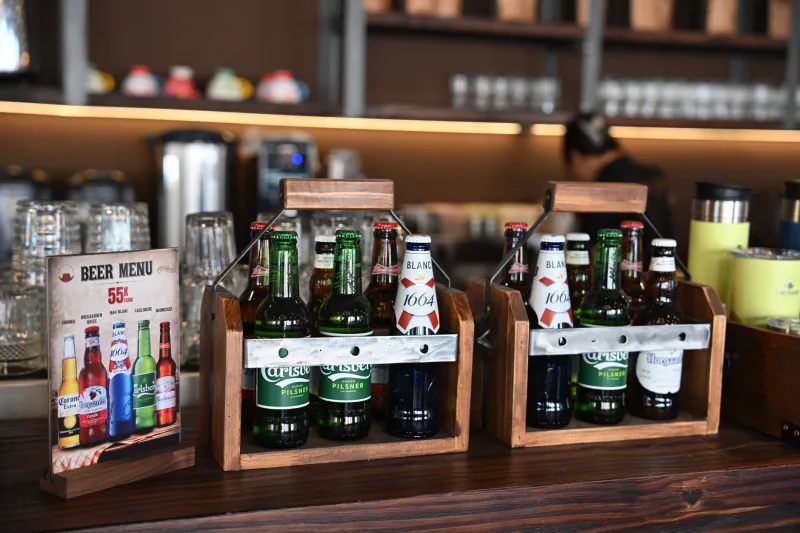
Walk into a great independent bottle shop on a Friday evening and you might be surprised by what you find. Sure, there are shelves lined with carefully curated cans and bottles — locals and imports, limited releases and everyday drinkers. But there's also a group of regulars gathered around a high-top table working through a tasting flight of farmhouse ales. A chalkboard near the register lists the week's rotating taps. Someone in the corner is asking the owner about which hazy IPA pairs best with the charcuterie board they're putting together for the weekend.
This isn't a brewery taproom. It's not a bar. It's something in between — and it might be the most interesting space in the craft beer world right now.
Independent bottle shops are reinventing themselves, and the transformation is happening fast.
The Old Model and Why It Needed an Upgrade
For a long time, the bottle shop business model was pretty straightforward: buy well, curate carefully, sell to enthusiasts who knew what they wanted and appreciated having access to hard-to-find stuff. It worked, and it still does — but the landscape around these stores has changed dramatically.
Taprooms are everywhere now. Breweries that used to rely on retail distribution have built their own destinations, giving drinkers a reason to bypass the middleman entirely. Online beer delivery services have expanded access to rare releases. And the overall craft beer market, after years of explosive growth, has matured into something more competitive and more crowded.
For bottle shops that wanted to survive — and thrive — standing pat wasn't an option.
"We realized pretty quickly that just being a good store wasn't going to be enough," says the owner of a well-regarded shop in Nashville that's been operating for nearly a decade. "People can find good beer a lot of places now. What they can't find everywhere is a place that feels like it belongs to them."
Building a Destination, Not Just a Storefront
The shops that are winning right now have figured out something important: the physical experience matters as much as the product selection. Adding tasting flights was an early and obvious move for many — it lets customers try before they buy, drives sales of bottles they might not have considered, and creates a reason to linger. But the really innovative retailers have gone further.
In Chicago, one independent shop hosts a weekly "blind tasting" night where regulars pay a flat fee to work through five unmarked pours and guess the style, brewery, or region. It sounds nerdy (it is), but it's also genuinely fun, and it's become one of the most reliably packed events on the shop's calendar. The owner says it's also one of the best marketing tools they have — people talk about it, share it on social media, and bring friends who've never been in the store before.
A bottle shop in Austin has taken a different angle, leaning hard into food pairing. Their staff regularly collaborates with local chefs and food vendors to create pairing menus that rotate with their tap selections. It's elevated the shop's reputation beyond the beer community and drawn in a crowd that might not have considered themselves craft beer people — at least not yet.
Out on the West Coast, a Portland shop built a small but fully functional tasting room behind their retail floor, complete with reserved seating for ticketed events. They've hosted everything from brewer meet-and-greets to guided vertical tastings of vintage releases. Their waitlist for certain events runs weeks out.
The Community Angle
If there's a common thread running through the most successful shop reinventions, it's community. Not community as a buzzword, but as a genuine strategic commitment to making the space feel like it belongs to the neighborhood.
That looks different depending on where you are. In smaller cities and towns, it might mean hosting local homebrew club meetings or partnering with nearby breweries on collaborative events. In bigger urban markets, it can mean carving out a specific identity — the shop that specializes in Belgian and European imports, or the one that's become the go-to spot for natural wine and craft beer crossover drinkers.
"We stopped thinking of ourselves as a retail store a few years ago," says the co-owner of a beloved shop in Philadelphia. "We're a gathering place that happens to sell really good beer. That shift in how we think about what we do changed everything about how we operate."
That shift shows up in the details: comfortable seating instead of purely functional shelving layouts, staff who are trained to have real conversations rather than just transactions, a loyalty program that rewards regulars not just for purchases but for showing up to events and bringing new people through the door.
The Business Reality
None of this comes without challenges. Adding taps and a tasting program means navigating licensing — and depending on the state, that can be complicated, expensive, or both. Staffing a shop that functions like a hybrid retail-hospitality operation requires a different skill set than a traditional retail hire. And events take time, planning, and marketing that smaller operations may not have the bandwidth for.
Margins in retail beer are thin, and the investment required to add programming isn't trivial. Some shops have found that events are more valuable as traffic drivers than direct revenue generators — the real payoff comes when someone attends a tasting night, discovers three bottles they want to take home, and becomes a regular.
Others have built programming that's genuinely profitable on its own, particularly ticketed events with premium pricing for exclusive bottle access or brewer appearances.
"You have to figure out what your version of this looks like," says the Nashville shop owner. "Not every idea works in every market. But the shops that are just selling beer and nothing else — I worry about them."
Why It Matters for Craft Beer Culture
Beyond the business case, there's something culturally meaningful about what these shops are doing. Brewery taprooms are great, but they're inherently promotional spaces — every pour is an advertisement for that specific brewery's beer. A great independent bottle shop is something different: a neutral, curious, endlessly exploratory space where the entire landscape of craft beer can coexist on the same shelf.
The best ones feel like record stores felt in their prime — places where you could go to discover something you didn't know you needed, have a conversation with someone who genuinely cared about what you were drinking, and leave with more enthusiasm for the thing you loved than when you walked in.
That's not a small thing. That's a community institution. And it turns out, with a little creativity and a lot of hustle, a bottle shop can be exactly that.