Dead Styles Walking: The Craft Brewers Bringing History's Best-Kept Beer Secrets Back to Life
Walk into almost any gas station or big-box grocery store in the US, and the beer aisle tells a pretty predictable story. Rows of silver and blue cans, a few familiar logos, maybe a light beer with a lime twist. It's clean, it's consistent, and it's about as adventurous as a white t-shirt.
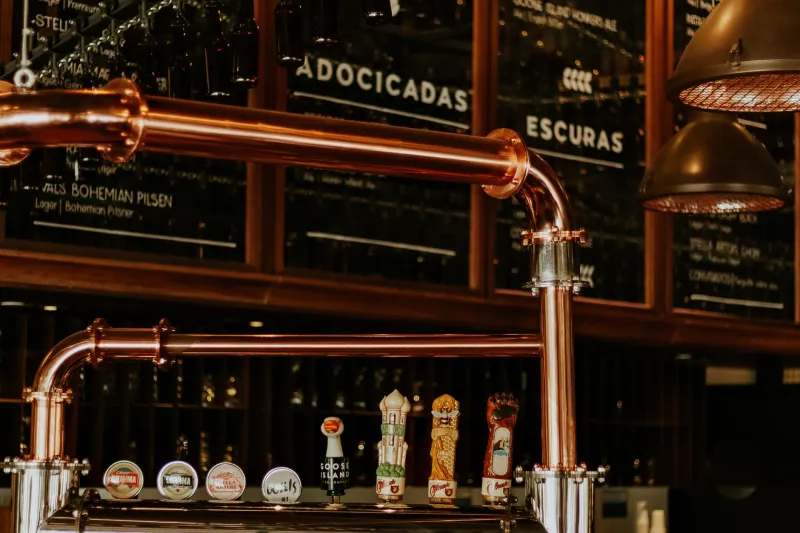
But spend an afternoon at your local craft taproom and you might find something on the chalkboard that stops you cold — a gose brewed with colonial-era spices, a smoked lichtenhainer that looks like it belongs in a 19th-century German farmhouse, or a Kentucky common ale that most drinkers under 60 have never heard of. These aren't novelty experiments. They're history in a glass, and the brewers behind them are dead serious about getting them right.
Craft beer has always thrived on creativity, but a quieter, nerdier revolution is underway. Independent breweries across the country are going full archaeologist — excavating forgotten styles, cross-referencing old brewing logs, and modernizing recipes that haven't seen a fermentation tank in decades, sometimes centuries.
Why Big Beer Walked Away From These Styles
The short answer? Scale and shelf life.
Large commercial breweries built their empires on consistency and volume. A beer that requires wild fermentation, unusual local ingredients, or a complicated multi-step mash schedule is a logistical headache at industrial scale. Styles like Berliner Weisse, grätzer, or American steam beer got squeezed out not because drinkers stopped loving them, but because they didn't survive the economic pressures of mass production.
Farmhouse ales are a perfect example. Saisons were originally brewed in Belgian and French farmhouses during winter months, designed to sustain agricultural workers through summer harvests. They were rustic, funky, and highly seasonal — literally the opposite of what a national brand needs. Big beer didn't kill these styles out of malice. They just couldn't make them work at scale without stripping out everything that made them interesting.
That's exactly where craft brewers found their opening.
The Historians Behind the Taps
Breweries like Jester King in Austin, Texas have become almost synonymous with the farmhouse revival. Their commitment to spontaneous fermentation and locally foraged ingredients isn't just a marketing angle — it's a philosophy rooted in how beer was actually made before refrigeration, pasteurization, and laboratory yeast strains changed everything.
Over in Philadelphia, Yards Brewing Company has spent years putting colonial-era recipes back on the map. Their Ales of the Revolution series — developed in collaboration with historians — includes a Thomas Jefferson recipe made with rye and wheat, a Poor Richard's Tavern Spruce Ale, and a George Washington-inspired molasses porter. These aren't gimmicks. They're genuine attempts to taste what America's founders were drinking at the tavern table.
Out in the Pacific Northwest, a handful of smaller operations are chasing even more obscure targets. The grätzer, a Polish smoked wheat beer that nearly vanished entirely during World War II, has found a second life at a handful of adventurous taprooms willing to source the right oak-smoked malt and embrace a style most American drinkers have never encountered. Same goes for the lichtenhainer — a sour, smoked German ale that predates the more familiar Rauchbier tradition and offers a genuinely strange, compelling drinking experience.
What "Reviving" Actually Looks Like
It's worth noting that historical beer resurrection isn't as simple as finding an old recipe and scaling it up. Most historical brewing records are incomplete, written in languages that require translation, or describe ingredients and processes that no longer exist in their original form.
Brewers doing this work are part detective, part historian, and part improviser. They're reading texts from the likes of Ron Pattinson, a British beer historian whose research into European brewing archives has become something of a bible in revival circles. They're reaching out to academic institutions, corresponding with European brewers keeping old traditions alive in small regional pockets, and sometimes just making educated guesses based on whatever evidence survives.
The Kentucky common — a pre-Prohibition style once popular across the Midwest that used a quick fermentation process and a mix of corn and barley — is a good case study. Breweries like Apocalypse Brew Works in Louisville have done serious legwork to understand what made this style distinct before Prohibition essentially wiped it from the American drinking landscape. The result isn't a perfect historical replica, but it's a genuine creative conversation with the past.
Modern Palates, Ancient Recipes
One of the most interesting tensions in this whole revival movement is the question of authenticity versus drinkability. Historical beers weren't always great by modern standards. Some were thin and acidic out of necessity. Others were heavily spiced to mask off-flavors from poor sanitation or inconsistent ingredients.
Craft brewers walking this line have to decide: do you brew it exactly as it was, warts and all, or do you modernize it enough that today's drinkers actually enjoy it?
Most land somewhere in the middle. They'll use historically accurate ingredients and techniques where possible, but they're not going to serve you something unpleasant just to prove a point. The goal is to honor the spirit of a style while making it genuinely worth drinking in 2024. That's a creative challenge most brewers find more exciting than tweaking hop ratios on yet another hazy IPA.
Why This Matters for the Craft Beer Community
Beyond the novelty factor, there's something genuinely important happening here. Every time a craft brewery successfully revives a forgotten style, they're expanding the vocabulary of beer. They're proving that the category has more range, more history, and more creative potential than the macro-beer world would ever suggest.
For drinkers, it's an invitation to be curious. Trying a gose for the first time, or wrapping your head around a smoked porter that tastes nothing like what you expected, changes the way you think about what beer can be. It makes you a more engaged, more knowledgeable enthusiast — exactly the kind of community that craft brewing depends on to survive.
And for the brewers themselves? These forgotten styles represent something genuinely rare in a crowded market: creative territory that hasn't been strip-mined yet. There are only so many ways to differentiate a New England IPA. But a well-researched revival of a nearly-extinct 18th-century farmhouse tradition? That's a story nobody else is telling.
Raise a Glass to What Almost Wasn't
Next time you're at your local taproom and you spot something on the menu that sounds completely unfamiliar, lean into it. Ask the bartender about it. If they're part of a brewery serious about this stuff, they'll have a story to tell — about the historical record they dug up, the ingredient sourcing headache they solved, or the three batches they dumped before getting it right.
That's the thing about dead beer styles. They're not really dead. They're just waiting for someone obsessive enough to bring them back. And right now, America's independent craft breweries are doing that work better than anyone.