Tiny Organisms, Huge Flavors: How Craft Breweries Are Making Yeast Their Most Guarded Ingredient
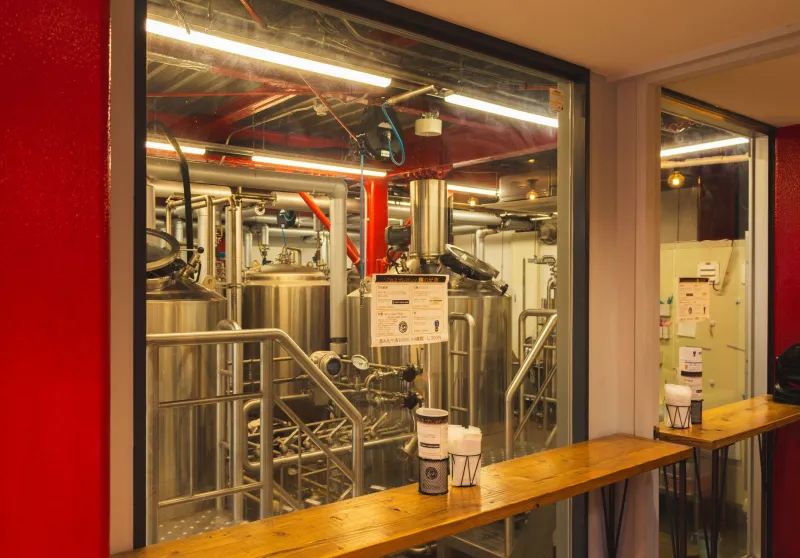
Ask most casual beer drinkers what makes their favorite IPA or saison taste the way it does, and you'll probably hear about hops, maybe malt, possibly the local water source. Yeast? It barely registers. And yet, for a growing number of craft brewers across the country, yeast isn't just an ingredient — it's the whole conversation.
Welcome to the world of fermentation science, where microbiologists and brewmasters are pulling up chairs at the same table, and the results are landing in your pint glass in ways most people never stop to consider.
The Invisible Ingredient That Does Everything
Yeast is responsible for fermentation — that much most people know. It eats sugars and produces alcohol and CO2. Simple enough, right? Not quite. What often gets glossed over is that yeast also produces hundreds of flavor compounds called esters, phenols, and fusel alcohols during fermentation. The specific strains you use, the temperature you ferment at, how much oxygen is present, how much yeast you pitch — all of it shapes what ends up in the glass.
Different strains produce wildly different flavor profiles. A Belgian witbier yeast might throw off notes of clove and banana. An English ale strain could lean into stone fruit and biscuit. And then there are the wild and mixed-fermentation cultures — the stuff of true obsession — that can deliver everything from tart cherry to barnyard funk to something you genuinely can't put a name to but absolutely cannot stop drinking.
For breweries serious about developing a house character — that thing that makes their beer immediately recognizable — yeast is where the conversation starts.
Proprietary Cultures and the Breweries That Guard Them
Some of the most celebrated craft breweries in the US have built their entire identity around a house yeast strain. Think about the way certain Belgian-inspired American breweries have a signature funkiness that you just can't replicate with an off-the-shelf pitch from a commercial yeast lab. That's not an accident. That's years of cultivation, selection, and — yes — secrecy.
Brewmasters who work with proprietary cultures tend to get a little cagey when you ask too many questions. And honestly? Fair enough. These strains represent years of work. Some have been maintained through hundreds of generations of repitching, slowly adapting to the specific environment of a particular brewery's fermenters, water chemistry, and even the ambient microflora of the building itself.
A few breweries have even gone so far as to store backup cultures off-site — essentially a yeast insurance policy — in case of contamination or equipment failure. It sounds dramatic until you realize that losing a house strain could mean losing the thing that makes your flagship beer taste like itself.
Inside the Lab: Where the Real R&D Happens
The more forward-thinking craft breweries aren't just maintaining existing strains — they're actively developing new ones. That's where partnerships with university fermentation science programs and independent yeast labs come in.
Places like the White Labs facility in San Diego or Inland Island Yeast Laboratories in Denver aren't just selling pre-packaged pitches to homebrewers. They're working directly with craft breweries on isolation projects, where wild yeast strains are captured from local environments — fruit skins, flower petals, tree bark, even the air around a specific hop yard — and screened for desirable flavor characteristics.
The process is painstaking. A single wild capture might yield dozens of isolates, most of which produce something unpleasant or downright undrinkable. But occasionally, something remarkable comes through. A strain that produces a particular tropical ester. One that ferments clean at unusually high temperatures. Another that throws a subtle spice note that pairs perfectly with a specific grain bill.
Brewmasters who go through this process describe it less like a chemistry experiment and more like a treasure hunt — one that might take months before you get anything worth scaling up.
Why This Matters for the Beer in Your Glass
So why should you, a person who just wants a great pint on a Friday night, care about any of this? Because it's the reason your local craft brewery's saison tastes different from the one brewed two towns over — even if they're using the same hops and the same base malt.
Yeast is what gives craft beer its genuine sense of place. It's the biological expression of a brewery's environment, its history, and its brewer's intentions. When a brewery cultivates its own strain over years and generations, they're essentially developing a living signature — something that can't be bought off a shelf or copied by a competitor who just wants to reverse-engineer the recipe.
There's also a sustainability angle worth noting. Breweries that repitch their yeast — harvesting it from one batch to use in the next — are reducing waste and input costs. A healthy, well-maintained culture can be repitched dozens of times before it needs to be refreshed, which means less reliance on commercially produced yeast and a smaller environmental footprint.
The Frontier: Mixed Fermentation and Beyond
If single-strain yeast cultivation is the established frontier, mixed fermentation is where things get genuinely wild. Breweries experimenting with spontaneous fermentation or house-blended cultures of Saccharomyces, Brettanomyces, Lactobacillus, and Pediococcus are essentially inviting a whole ecosystem into the tank and seeing what happens.
This is the tradition behind Belgian lambics and American wild ales, and it's gaining serious traction in the craft beer world. The results are unpredictable — sometimes frustratingly so — but when they work, they produce beers of staggering complexity. Beers that evolve in the glass. Beers that taste different six months after they were packaged than they did the day they were kegged.
Breweries like Jester King in Texas, Allagash in Maine, and Scratch Brewing in Illinois have built devoted followings largely on the strength of their fermentation programs. Their fans aren't just buying beer — they're buying into a living process.
Raise a Glass to the Microbes
Next time you crack open a craft beer that stops you mid-sip — something with a flavor you can't quite place but absolutely love — take a second to think about what's behind it. Somewhere, a brewer spent months nurturing a culture, tracking fermentation temperatures, tasting samples at every stage, and making judgment calls based on a combination of data and gut instinct.
The hops get the headlines. The malts get the origin stories. But yeast? Yeast is doing the real work. And the breweries that understand that are quietly making some of the most interesting beer in the country.
That's worth knowing — and worth drinking to.