Every Barrel Tells a Different Story: Inside Craft Brewing's Most Unpredictable Art Form
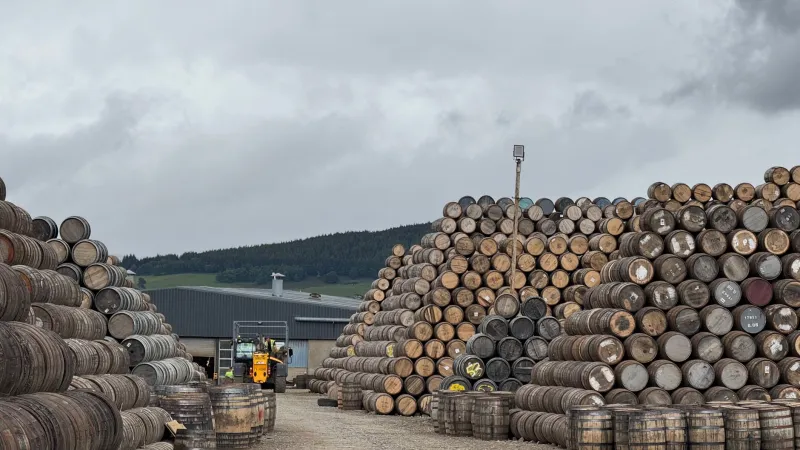
There's a barrel sitting in a warehouse somewhere in Louisville, Kentucky, that spent the last two years soaking up a single-barrel bourbon. Before that, it held charred American white oak shaped by a cooperage in Missouri. Before that, it was just a tree. Now, a craft brewer in the Pacific Northwest has filled it with an imperial stout, and nobody — not even the brewer — knows exactly what's going to come out the other end.
That's the thing about barrel-aged beer. It's the one corner of craft brewing where the recipe is really just a starting point.
Wood Is a Living Variable
Most people understand that bourbon barrels impart vanilla and caramel notes. Wine casks can add tannins, fruit, and a certain earthiness. Rum barrels bring sweetness. But the actual flavor transfer is far messier and more interesting than any single-line description suggests.
The char level on a bourbon barrel matters. The previous tenant matters. How many times that barrel has been used matters. Whether it was stored in a humid cellar or a dry warehouse matters. Even the season during which the beer is filled — and how temperatures swing over the aging period — can shift the final flavor in ways that are genuinely hard to predict.
"We've filled the same base stout into two barrels from the same distillery, same production year, and pulled completely different beers," says one Pacific Northwest brewmaster who's been running a barrel program for nearly a decade. "One came out with deep dark chocolate and dried cherry. The other was almost savory — like a mole sauce situation. Same beer going in. Totally different story coming out."
That unpredictability isn't a bug. For a lot of craft breweries, it's the whole point.
The Sourcing Puzzle
Before a single drop of beer enters a barrel, there's already a significant challenge: finding the right wood in the first place.
The explosion of American craft distilling over the past fifteen years has actually been a boon for craft brewers. More bourbon and whiskey producers means more used barrels cycling into the market. But "more available" doesn't mean "easier to source well." Brewers hunting for specific flavor profiles — say, a barrel that previously held a wheated bourbon versus a high-rye mash — often need established relationships with distilleries, and those relationships take time.
Then there's the emerging world of non-standard barrels. Some breweries are now experimenting with former tequila barrels, mezcal casks, Japanese whisky wood, and even barrels that previously held hot sauce or maple syrup. Each one brings its own chemical fingerprint, and each one demands a base beer that can hold up to — or complement — whatever flavors the wood is going to contribute.
"We tried a mezcal barrel last year with a smoked porter," says a Colorado brewer who runs a small but ambitious barrel program out of a repurposed warehouse space. "The smokiness of the porter and the smokiness from the mezcal either cancel each other out or amplify each other depending on how long you go. We pulled samples every two weeks for four months trying to catch the right window. It was nerve-wracking."
That window metaphor comes up a lot in barrel-aging conversations. The beer inside the barrel is always changing, always moving toward something — and the brewer's job is to catch it at the right moment.
Time, Temperature, and the Angel's Share
Barrel-aging isn't a passive process. Brewers who take it seriously are monitoring their barrels regularly, tasting samples, tracking how the beer interacts with the wood over time. And one of the biggest variables they can't fully control is the environment around the barrel.
In traditional whiskey production, the temperature swings in a rickhouse — those massive, uninsulated warehouse structures — are considered essential. The wood expands in summer heat, pulling liquid in. It contracts in winter cold, pushing it back out. That cycling drives flavor extraction.
Craft breweries don't always have the luxury of a purpose-built aging facility. Some use repurposed spaces, garages, or converted industrial buildings where temperature control is approximate at best. For certain brewers, that's actually a feature — it means the local climate becomes part of the beer's character in a way that's genuinely unrepeatable.
There's also the matter of evaporation. The so-called "angel's share" — the portion of liquid that escapes through the porous wood — means the brewer is losing beer over time. In a high-ABV imperial stout, that might be acceptable. In a lower-ABV session ale, it can be a real problem. Not every style is suited for barrel aging, which is why you tend to see the practice concentrated around bigger, bolder beers that can handle the concentration that comes with long wood contact.
When It Works, It Really Works
For all the risk and uncertainty, the results when everything clicks are the kind of beers that end up on bucket lists. Craft beer enthusiasts trade bottles of well-regarded barrel-aged releases the way wine collectors swap prized vintages. Some limited runs sell out within hours of announcement — if they're announced publicly at all.
Part of the appeal is exactly the variability that makes barrel programs so difficult to manage. When you crack open a bottle of a barrel-aged release, you're drinking something that genuinely cannot be reproduced. Even if the brewer fills that same recipe into a hundred more barrels, no two will be identical. There's a collectibility to that, sure, but there's also something philosophically satisfying about it for a lot of beer drinkers.
"People talk about terroir in wine, and I think barrel-aged beer has its own version of that," says a Midwest brewer who sources barrels exclusively from distilleries within a three-state radius. "Every barrel carries the history of where it's been, what it's held, how it was made. When you drink the beer, you're tasting all of that."
The Risk Is Part of the Craft
Not every barrel program ends in triumph. Barrels can be contaminated. Wood can impart off-flavors — harsh astringency, excessive tannins, or worse, acetic acid from a barrel that's harboring the wrong kind of bacteria. A brewer can do everything right and still pull a batch that doesn't meet the standard for release.
That's a real financial hit for a small operation. Barrels aren't cheap, the beer inside them represents months of work, and there's no guarantee of a sellable product at the end. It's one reason why barrel programs tend to be the domain of breweries that have built up enough stability to absorb the occasional loss.
But ask almost any brewer who runs one of these programs whether the risk is worth it, and the answer is some version of the same thing: yes, without hesitation. Because the beers that come out the other side of a successful barrel run aren't just good. They're singular. They're irreplaceable. They're the kind of thing that reminds you why craft beer exists in the first place — not to be consistent, but to be alive.
And that, more than any tasting note, is the whole story.