Wild at Heart: The Brewers Embracing Bacteria, Barrels, and Beautiful Chaos to Craft America's Best Sour Ales
There's a moment in every sour beer's life when a brewer has to make a choice: trust the chaos, or dump the batch. It's not a decision made lightly. After months — sometimes years — of watching a barrel sit quietly in a cellar, developing flavors that no recipe can fully predict, you either believe in what's happening inside that oak, or you walk away.
More and more American craft brewers are choosing to believe. And the results are some of the most exciting, conversation-starting pints in the country right now.
Sour ales have traveled a long road from niche curiosity to taproom staple. A decade ago, if you ordered something funky at your local craft bar, you might get a blank stare. Today, spontaneous fermentation programs and mixed-culture barrel rooms are practically a badge of honor for serious breweries coast to coast. But what actually goes into making these beers? And why does it take so much patience, science, and frankly, nerve?
The Microbiology Behind the Magic
Let's start with the basics. Most beer fermentation is a pretty controlled affair — brewers pitch a known yeast strain, control the temperature, and more or less know what they're going to get. Sour beer throws that playbook out the window.
The tart, complex flavors in a well-made sour come from microorganisms beyond standard Saccharomyces yeast. The big players are Lactobacillus and Pediococcus (bacteria that produce lactic acid, the same compound that makes yogurt tangy) and Brettanomyces, a wild yeast strain that contributes earthy, leathery, and sometimes downright barnyard-like notes that sound weird on paper but taste incredible in the glass.
Each of these organisms works on its own timeline and responds differently to temperature, sugar content, and the microbial neighbors it's sharing space with. Getting them to play nicely together — and produce a balanced, drinkable result — is equal parts science and instinct.
"You're not really making the beer," says one Midwest brewmaster who runs a mixed-fermentation program out of a converted warehouse. "You're creating the conditions and then getting out of the way. The organisms do what they want. Your job is to understand them well enough to guide the outcome."
Spontaneous Fermentation: The Oldest Trick in the Book
If mixed-culture brewing is a controlled experiment, spontaneous fermentation is an open invitation to whatever's floating in the air around you. Inspired by Belgian lambic traditions, a small but growing number of American breweries are cooling their wort overnight in open vessels called coolships, letting wild yeast and bacteria from the local environment drift in and start the fermentation process naturally.
The results are deeply tied to place. A brewery in the Pacific Northwest is going to capture different organisms than one in the mid-Atlantic or the Texas Hill Country. That regional signature is part of the appeal — a spontaneously fermented beer from Portland, Oregon is going to taste different from one made in Burlington, Vermont, even if the grain bill is identical.
It's also wildly unpredictable. Batches can go sideways. Warm weather years can throw off microbial populations. A good coolship season in one region might be a frustrating one for a brewery a few states over. Brewers who pursue this method know they're signing up for some losses. But when it works, the results are something no other process can replicate.
Barrel Aging and the Long Game
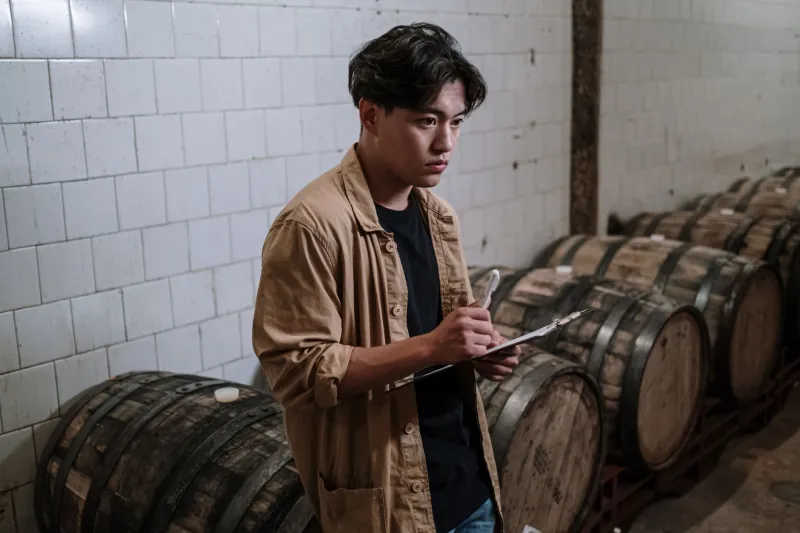
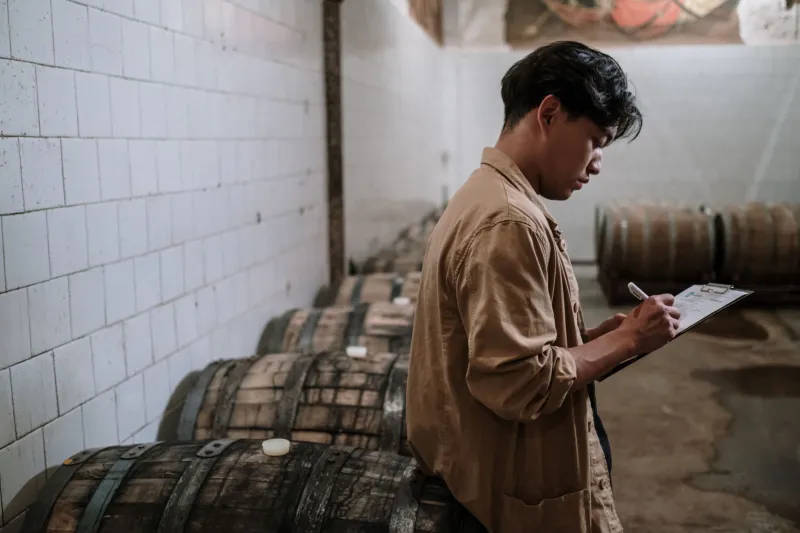
Barrels are central to most serious sour programs, and for good reason. Used wine, whiskey, and spirit barrels introduce additional microbial complexity (there's plenty of Brettanomyces hiding in old oak), while also contributing flavor compounds like vanilla, tannin, and whatever ghost of the barrel's previous life still lingers in the wood.
Time in barrel can range from a few months for a simpler kettle sour to three or four years for a traditional lambic-style ale. During that time, brewers are tasting regularly, pulling samples, and making decisions about when to blend, when to bottle, and when to let things ride a little longer.
Blending is its own art form. Many of the best American sour producers maintain a solera — a large vessel of continuously aging beer from which they draw a portion each year and replace with fresh wort — or they maintain multiple barrel vintages that can be combined to balance acidity, body, and funk. Think of it less like brewing and more like winemaking, with all the patience that implies.
Kettle Souring: Speed Without Sacrifice?
Not every brewery has the space, time, or risk tolerance for a full barrel program. Enter kettle souring, a faster method that's made sour beer accessible to a much wider range of producers. In this process, brewers add Lactobacillus directly to the kettle before boiling, letting it acidify the wort over 24 to 48 hours before the boil kills the bacteria and normal fermentation proceeds.
The results are clean, reliably tart, and consistent — which is great for session-style sours and fruit beers. Critics argue that kettle sours lack the depth and complexity of traditionally fermented wild ales, and they're not wrong. But they're also more approachable, lower risk, and a solid entry point for drinkers who are new to the category.
Many breweries run both programs side by side — kettle sours for the rotating tap list, barrel-aged wild ales as limited releases and cellar gems. It's a smart strategy that keeps the lights on while the long game plays out in the barrel room.
Why Sour Beer Found Its Moment
The rise of sour beer in America isn't just a brewing trend — it reflects a broader shift in how craft beer drinkers think about flavor. A generation of enthusiasts raised on aggressively hopped IPAs started looking for something different. Sour ales offered complexity, drinkability, and a genuine sense of discovery. No two batches are quite the same. Every bottle is a little bit of a surprise.
There's also something genuinely exciting about a beer that has a story — one that took three years, a specific set of barrels, and a particular microclimate to produce. In a world of instant everything, a beer that demands patience feels special.
For the brewers making them, that's always been the point. "You can't rush it," says one East Coast barrel program director. "And honestly, that's what I love about it. It keeps you humble."
So next time you see a wild ale or barrel-aged sour on a tap list, take a second before you order. Think about the bacteria, the barrels, the years of waiting, and the brewer who decided to trust the chaos. Then order it. You've earned it.