Buy In, Drink Up: How Community-Owned Breweries Are Building Something Bigger Than Beer
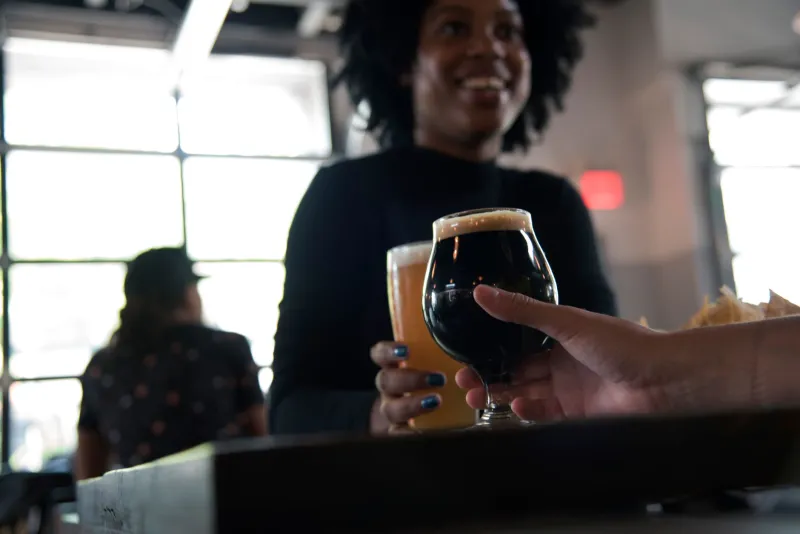
Picture this: you walk into your neighborhood brewery on a Friday night, order a pint of the seasonal amber ale, and feel that warm sense of belonging that good taprooms seem to generate effortlessly. Now imagine that this place — the equipment, the recipes, the building itself — is partly yours. Not in a sentimental way. In an actual, legal, you-own-a-share-of-this-business way.
That's the premise behind the cooperative brewery model, and it's gaining serious traction across the United States. From the Pacific Northwest to the rural Midwest to mid-sized cities in the South, community-funded breweries are opening their doors — and their cap tables — to the neighbors, regulars, and local advocates who want more than a loyalty punch card. They want equity.
The Basics: What Makes a Brewery a Co-Op?
Not every crowdfunded brewery is a cooperative, and not every co-op is structured the same way. But the core idea is consistent: instead of a single owner or a small group of investors calling all the shots, a co-op brewery distributes ownership — and often decision-making power — across a broader community of members.
Some co-ops operate under traditional cooperative law, where each member gets one vote regardless of how much they've invested. Others use a consumer cooperative model, where the people who buy the beer are also the owners. Still others are structured as investment cooperatives, functioning somewhat like a community stock offering, where residents of a town or neighborhood can purchase shares and receive returns if the brewery turns a profit.
The legal mechanics vary by state, which can make launching one of these breweries a complicated process. But the appeal is undeniable — and the results, in many cases, have been remarkable.
Real Breweries, Real Communities
Look at what happened in Missoula, Montana, where Bayern Brewing — one of the oldest craft breweries in the state — transitioned to employee ownership through a worker cooperative model after its longtime German founder decided to step back. The employees who had been making the lagers and dunkels for years became the new stewards of the brand. Business didn't just survive the transition — it deepened the brewery's roots in the local community.
Or consider Asheville, North Carolina, a city that has become one of the most beer-saturated markets in the country per capita. When a neighborhood co-op in the River Arts District started exploring opening a brewery, they found that the community investment model actually made fundraising easier — not harder. "People weren't just buying into a business," one of the organizing members explained. "They were buying into a reason to show up. That's a different kind of investment."
Out in the Pacific Northwest, several small towns that lost their anchor employers in recent decades have turned to cooperative breweries as part of broader economic revitalization efforts. When a community owns the business, it has every reason to keep showing up — and to bring friends.
Why This Model Creates Unusual Loyalty
Traditional craft brewery marketing relies heavily on brand storytelling — the founder's journey, the origin myth, the hand-drawn label. And that stuff works. But cooperative breweries have access to a different and arguably more powerful narrative: you helped build this.
When someone has put real money into a business — even a modest amount — their relationship to it fundamentally changes. They're not just a customer. They're an advocate. They tell their coworkers about it. They bring out-of-town guests. They post about it without being asked. They show up on a slow Tuesday because they want to see the place succeed.
"We have members who drive forty-five minutes to get here on a weeknight," says the general manager of a cooperative taproom in rural Wisconsin. "They could stop at a perfectly good bar on the way. But they come here because this is theirs. That's not something you can manufacture with a marketing campaign."
This loyalty also tends to translate into resilience. During the COVID-19 pandemic, several cooperative breweries reported that their member-owner communities mobilized quickly to support them — buying merchandise, purchasing gift cards, and spreading the word — in ways that kept them afloat when many traditionally owned taprooms struggled.
The Challenges Are Real, Too
It would be dishonest to paint this as a frictionless model. Starting a cooperative brewery is genuinely harder in some ways than launching a traditional one.
Fundraising from many small investors takes longer and requires more legal infrastructure than landing a single angel investor or small business loan. Decision-making can get complicated when dozens or hundreds of stakeholders have a voice in things like menu changes, expansion plans, or head brewer hires. And not every community has the organizational culture or the initial capital density to make a co-op viable.
There's also the question of scale. Cooperative breweries tend to stay local by design, which is part of their charm — but it also means they're rarely going to become regional powerhouses or distribution juggernauts. For some founders, that's exactly the point. For others, it can feel like a ceiling.
"We're not trying to be Dogfish Head," laughs the co-founder of a cooperative brewery in Lawrence, Kansas. "We're trying to be the best possible version of a Lawrence brewery. Those are really different goals."
A New Kind of Stakeholder
What's most interesting about the cooperative brewery movement isn't just the ownership structure — it's what that structure says about what people want from their local beer scene right now.
Craft beer has always been about something beyond the liquid in the glass. It's been about independence, authenticity, a rejection of the homogenized mass market. The cooperative model takes that ethos and makes it structural. It's not just that this brewery feels like it belongs to the community. It legally does.
As more Americans look for ways to invest locally, support small businesses, and build genuine connections in their neighborhoods, the community-owned brewery might turn out to be one of the more elegant answers the craft beer world has produced. It's a pint and a stake in something real — and that's a combination that's pretty hard to argue with.