Brewing Without Borders: How Women Are Reshaping the Craft Beer Landscape From the Ground Up
Walk into almost any craft brewery in America and you'll see it: the tap list dominated by big, bitter IPAs and imperial stouts, the merch featuring skulls and axes, the marketing language that reads like it was written for a very specific — and very narrow — demographic. For a long time, this was just the water craft beer swam in. Women were a secondary thought, if they were a thought at all.
But spend a few hours talking to the female brewers, taproom owners, and beer educators who are reshaping this industry right now, and you'll realize something has shifted significantly. The change isn't just cultural — it's showing up in what's actually being brewed, how it's being marketed, and who's walking through the door.
The Myth That Needed Busting
Let's start with the assumption that's caused the most damage: the idea that women don't like bitter beer.
It's not entirely wrong, but it's been wildly over-applied. Research does suggest that, on average, women tend to have more taste receptors per square centimeter on their tongues than men — a biological difference that can make intensely bitter flavors more pronounced and sometimes less pleasant. But extrapolating from that to "women want fruity, light, sweet beer" is a leap that has more to do with lazy marketing than science.
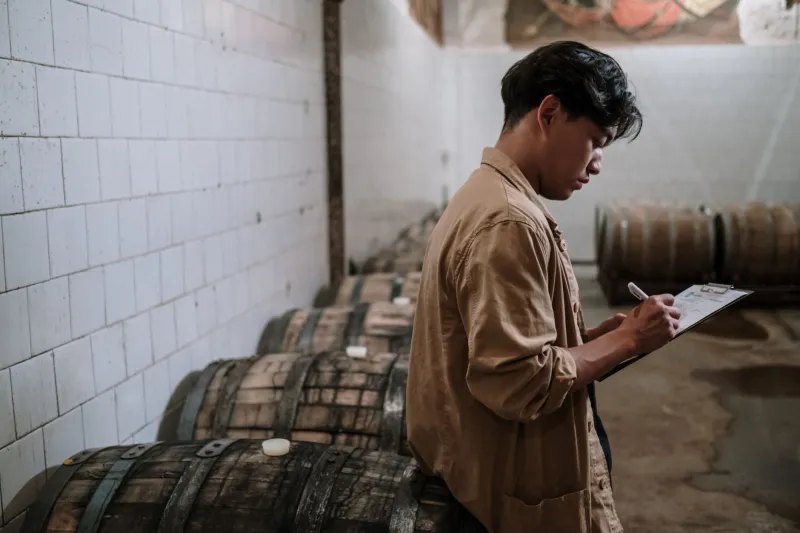
"There's this assumption that if you're brewing for women, you're brewing something simple," says Cara Ndiaye, head brewer at a farmhouse-style brewery in Asheville, North Carolina. "But some of the most complex, technically demanding beers in the world — Belgian lambics, Berliner weisses, barrel-aged saisons — are also lower in perceived bitterness. Complexity and approachability aren't opposites."
Ndiaye's flagship is a dry-hopped grisette that leads with citrus and white pepper rather than resinous bitterness. It's subtle, layered, and genuinely hard to brew well. It's also one of the most popular beers on her tap list, and her customer base is about evenly split by gender.
What Women Are Actually Brewing
The beers that female brewers are making aren't a monolith — and that's exactly the point. What they share is less about flavor profile and more about intentionality. These are brewers who are thinking carefully about what they're making and why, often because they've had to justify their presence in a male-dominated industry every step of the way.
At a craft brewery in Minneapolis, Minnesota, co-founder and head brewer Renata Holloway has built her entire lineup around what she calls "flavor-forward, ego-free brewing." That means no arms race for the highest IBU count, no imperial versions of everything, no 11% ABV "session" beers. Her most celebrated release is a Czech-style pale lager dry-hopped with Saaz and Hallertau Blanc — crushable, aromatic, and genuinely elegant.
"I got so tired of the machismo around big, aggressive beers," Holloway says. "There's nothing wrong with those beers. But when that's all you make, you're telling half your potential customers that this place isn't for them. I wanted to make a brewery that was for everyone."
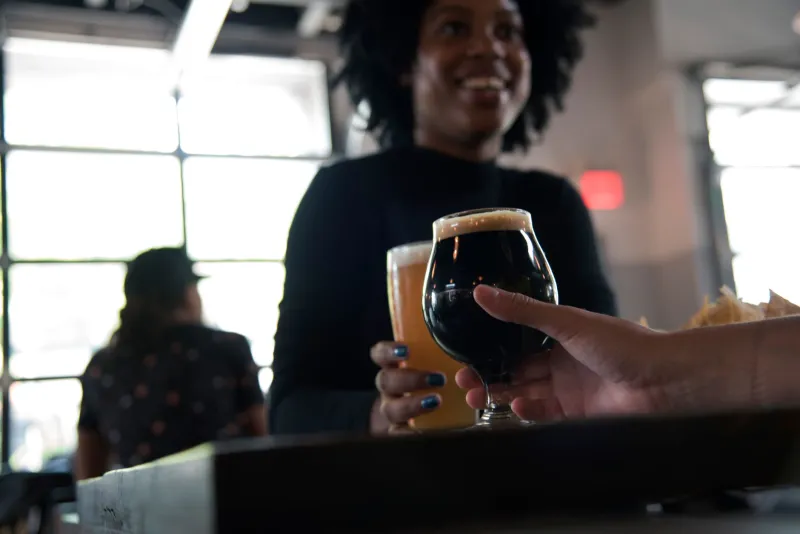
In Austin, Texas, a cooperative of four women co-founded a brewery specifically built around lower-bitterness styles: cream ales, wheat beers, Kölsch, and a rotating series of kettle sours that showcase local fruit. Their taproom design is deliberately warm and inviting — no industrial concrete and Edison bulbs, just natural wood, plants, and good lighting. "We wanted it to feel like a place you'd actually want to spend three hours," says co-founder Delia Marsh. "Not a warehouse with beer in it."
The Marketing Problem — and the Fix
If the brewing side of this story is encouraging, the marketing side still has ground to cover. The craft beer industry has a long history of tone-deaf campaigns — from labels featuring sexualized imagery to product names that rely on juvenile humor. Some of those missteps have faced public backlash and been retired. Others are still out there.
But a new generation of brewery owners — many of them women, many of them from communities that have historically been underrepresented in craft beer — is building brands that don't make those mistakes in the first place.
"It's not about making a 'beer for women,'" explains Jasmine Cortez, who runs a marketing consultancy focused on craft beverage brands in the Pacific Northwest. "It's about making a brand that doesn't actively exclude people. That's a much lower bar than most breweries seem to think."
Practically, that means label art that doesn't rely on gender tropes, tap list descriptions that focus on flavor rather than bravado, and social media content that reflects the actual diversity of people who drink craft beer. It means having women on your staff in roles that are visible — behind the bar, behind the brew kettle, behind the microphone at your events.
"When a woman walks into a taproom and sees another woman pouring the beer, explaining the ingredients, talking about the process," says Cortez, "that sends a message that this place is for her. You can't overstate how powerful that is."
The Numbers Are Starting to Move
Women make up roughly 50 percent of the U.S. beer market when you look at all beer broadly — but in craft specifically, they've historically been underrepresented as both consumers and producers. The Brewers Association has noted a gradual shift over the past decade, with more women entering brewing programs, taking on head brewer roles, and launching their own operations.
Organizations like the Pink Boots Society, a nonprofit supporting women in the brewing industry, have grown substantially in membership over the past several years, providing scholarships, networking, and professional development to female beer professionals at every level of the industry.
The consumer side is shifting too. Younger drinkers — particularly millennials and Gen Z — report being less attached to gendered brand identities and more interested in flavor, quality, and the values of the brewery they're supporting. For a craft beer industry that's been navigating a challenging market, that's a meaningful signal.
A Better Pint for Everyone
Here's the thing about building a craft brewery that genuinely welcomes women: it tends to make the beer and the experience better for everyone. Lower-bitterness styles, carefully crafted approachable lagers, thoughtfully designed taprooms, and marketing that leads with flavor rather than attitude — none of that is a compromise. It's just good brewing.
The brewers leading this charge aren't asking for a separate category or a special section of the tap list. They're asking for a seat at the table — and increasingly, they're building the table themselves. The beers coming out of that effort are some of the most interesting and delicious in American craft right now.
Next time you're at your local taproom, skip the double IPA for a minute. Try the saison, the grisette, the Kölsch, the kettle sour. There's a good chance a woman brewed it. And there's an even better chance it's exactly what you didn't know you were missing.