Taste Like a Pro: How Craft Breweries Are Using Sensory Science to Build Better Palates
There's a moment that happens at almost every brewery tour. Someone takes a sip, tilts their head, and says something like, "I'm getting... citrus? Maybe? I don't know, I'm not good at this." And the tour guide smiles and says, "You're actually pretty close."
That exchange, casual as it sounds, is at the center of a quiet revolution happening across the American craft beer scene. Breweries big and small are investing in something called sensory evaluation — a structured, science-backed approach to tasting that goes way beyond swirling your glass and guessing at flavors. And the coolest part? They're not just using it to train their own brewers. They're opening it up to anyone who wants to drink more intentionally.
What Even Is Sensory Science?
Sensory science is the study of how humans perceive flavor — and it's been a cornerstone of the food and beverage industry for decades. Think about how major snack brands test chip flavors before launch, or how coffee roasters calibrate their blends. The craft beer world has been a little slower to adopt formal sensory methodology, but that's changing fast.
At its core, sensory evaluation applies psychology, physiology, and chemistry to the act of tasting. It acknowledges that flavor perception isn't just about your taste buds. It's about your nose (roughly 80% of what we call "taste" is actually smell), your memory, your mood, even the color of the liquid in your glass. Sensory scientists design tests to isolate variables, reduce bias, and create repeatable, reliable results.
For breweries, this means moving beyond gut feelings and into something a lot more rigorous.
From Guesswork to Methodology
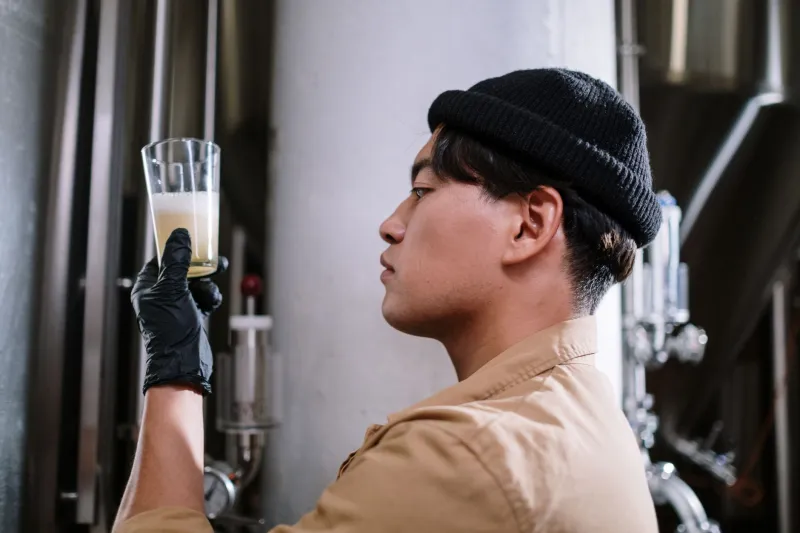
Some of the country's more progressive craft breweries have started partnering directly with food scientists — sometimes from nearby universities, sometimes through consulting firms — to develop internal tasting programs. The goal isn't to turn every brewer into a flavor robot. It's to create a shared vocabulary and a consistent baseline.
One of the most common tools is the flavor wheel, originally developed by the American Society of Brewing Chemists and later adapted by organizations like the Brewers Association. It maps hundreds of flavor and aroma descriptors into categories — fruity, roasty, spicy, sulfuric — and gives tasters a common language to work from. Instead of saying "this smells weird," a trained taster might say "I'm detecting a slight DMS note, which suggests an issue with the boil." That kind of precision matters enormously in quality control.
But it goes further than just naming things. Structured tasting protocols involve things like triangle tests (can you identify the odd beer out of three samples?), threshold testing (at what concentration do you start detecting a specific off-flavor?), and ranking exercises that train tasters to distinguish intensity levels. These aren't tricks — they're the same methods used by flavor researchers in academic settings.
The Psychology Behind the Pint
Here's where it gets genuinely fascinating: a lot of what we think we're tasting is actually in our heads. Not in a dismissive way — in a very real, neurological way.
Studies have shown that people consistently rate the same beer as higher quality when it's served in a heavier glass, or when they're told it's from a small independent brewery versus a large conglomerate. Color influences perceived flavor — a beer dyed red will often be described as fruitier than the identical beer served in its natural golden hue. Even background music has been shown to affect how sweet or bitter a beer tastes.
Brewing sensory programs take these biases seriously. By conducting blind tastings, controlling environmental variables like lighting and temperature, and training tasters to recognize their own cognitive tendencies, breweries are working to strip away the noise and get to something closer to objective perception. It's humbling work. Even experienced brewers are surprised by how often their expectations color their experience.
Bringing It to the Taproom
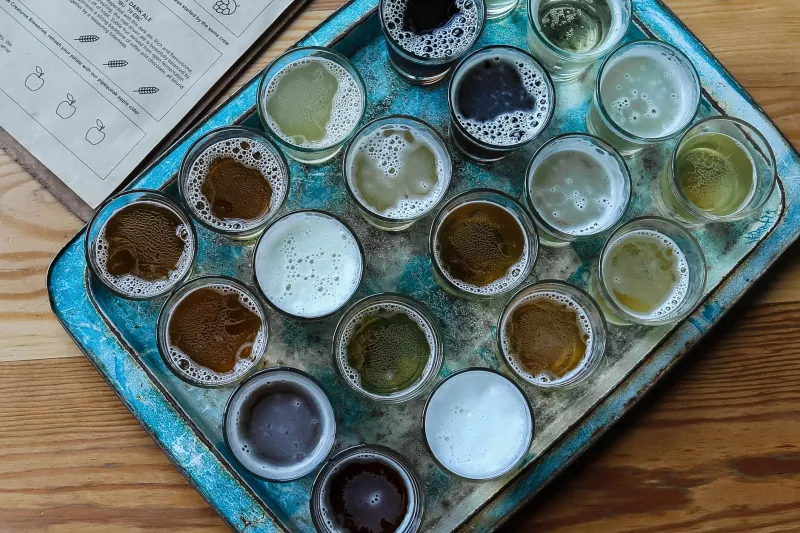
What's especially exciting for everyday beer drinkers is that these methodologies are starting to trickle down from the lab and onto the tasting flight menu.
A growing number of craft breweries are offering structured sensory experiences for customers — ticketed events where participants work through guided exercises designed to sharpen their palates. Some use aroma kits containing isolated scent compounds (pine resin, fresh bread, clove, green pepper) so tasters can train their noses to recognize specific ingredients before they ever hit the beer. Others run side-by-side comparisons of intentionally flawed beers next to their properly brewed counterparts, so you can actually learn what oxidation or excess diacetyl smells like in real time.
These aren't stuffy, intimidating experiences. Done well, they're genuinely fun — part science class, part social event. And they have a democratizing effect that feels very in line with what the craft beer movement has always been about. You don't need a sommelier certification or a decade of homebrewing experience to develop a more sophisticated palate. You just need a little guidance and the willingness to pay attention.
Why It Matters for the Industry
Beyond the cool factor, sensory training has serious practical implications for craft breweries trying to compete in an increasingly crowded market.
Consistency is one of the biggest challenges facing any growing brewery. When you're scaling up production, maintaining the exact flavor profile that made your IPA famous in the first place is genuinely hard. Sensory panels — small groups of trained tasters who evaluate each batch before it goes out — serve as a quality control checkpoint that no piece of equipment can fully replace. Human perception catches things that instruments miss, particularly when it comes to subtle flavor interactions and balance.
There's also a marketing dimension. Breweries that invest in sensory education are building a more engaged, loyal customer base. When a drinker understands why they love a particular beer — not just that they love it — they become advocates. They talk about it differently. They come back more intentionally. In an era where craft beer faces stiff competition from hard seltzers, canned cocktails, and non-alcoholic alternatives, that kind of deep engagement is worth its weight in malt.
Your Palate Is Already Better Than You Think
If there's one takeaway from the sensory science movement, it's this: everyone has the capacity to taste with more depth and nuance. The idea that some people are just "natural" tasters while the rest of us are hopeless is largely a myth. Flavor perception is a skill, and like any skill, it responds to practice and instruction.
Next time your favorite brewery offers a tasting event or a guided flight, lean in. Ask your server about the flavor compounds in that hazy pale ale. Pick up an aroma reference kit online and spend a Saturday afternoon training your nose. You might be surprised how quickly your experience of a simple pint changes.
The science of tasting is really just the science of paying attention — and that's something any beer lover can get behind.