Does Size Really Matter? The Science Behind Why Your Local Brewery Might Be Outbrewing the Big Guys
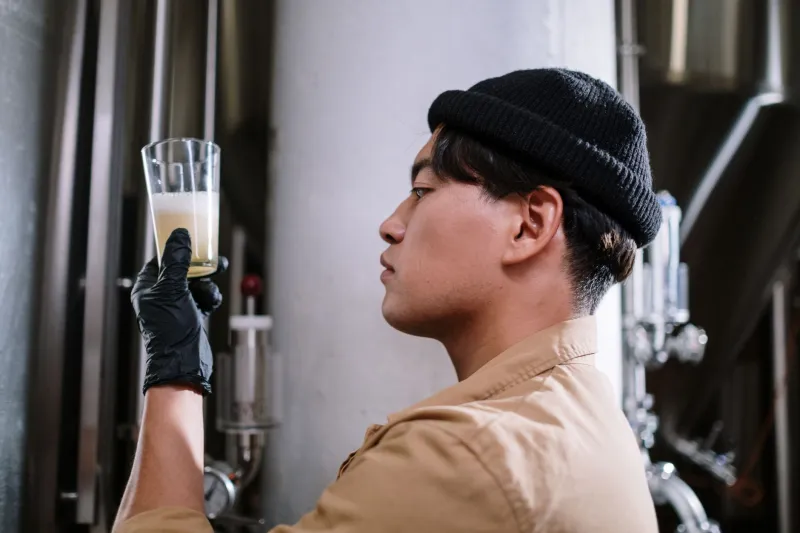
There's a moment every craft beer fan knows well. You hand a skeptic a pour from your favorite local brewery — no label, no backstory — and watch their eyebrows go up. "Okay," they admit, "that's actually really good." What they're experiencing isn't a trick. It might just be science.
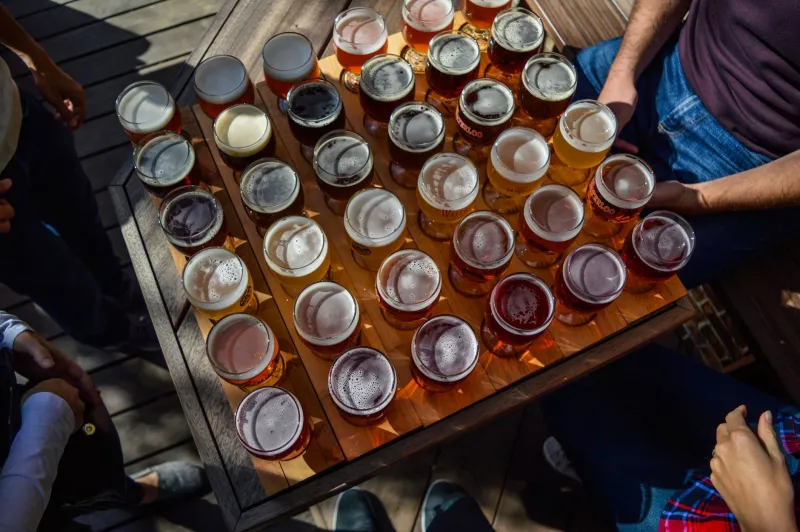
Blind taste tests have been quietly embarrassing the big players for years. Consumer panels, homebrew competitions, and academic sensory studies alike keep surfacing the same uncomfortable result: when drinkers don't know what they're sipping, smaller craft operations frequently hold their own — and often beat out — the industrial heavyweights. So what's really going on here? Is craft beer genuinely better, or are we just wired to think it is?
The answer, as it turns out, is a little of both. But the "genuinely better" part is more grounded in hard science than you might expect.
What Happens When You Scale Up a Recipe
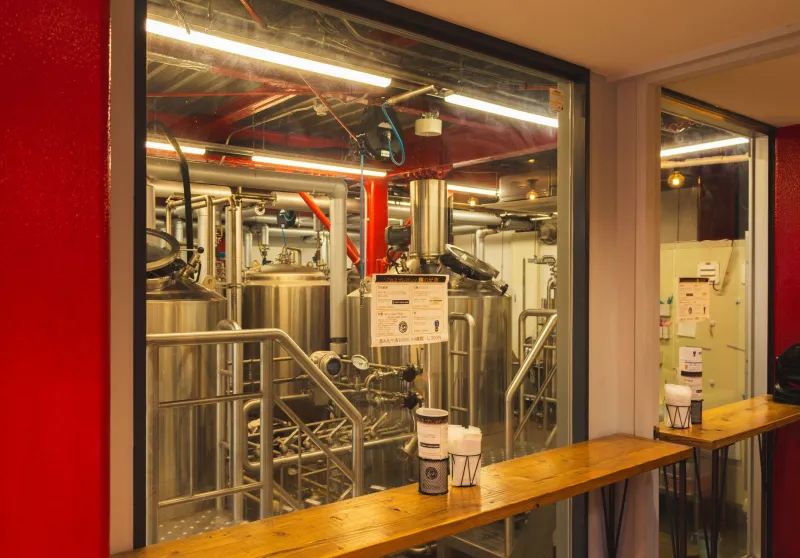
Let's start with the basics. When a brewery goes from producing 1,000 barrels a year to 1,000,000, the recipe doesn't just get bigger — it fundamentally changes. The physics of fermentation don't scale linearly. Large fermentation vessels, sometimes holding hundreds of thousands of gallons, create uneven temperature gradients and pressure differences that affect how yeast behaves. Yeast under pressure produces different flavor compounds than yeast in a small, well-managed tank.
"At industrial scale, you're managing yeast stress constantly," explains one veteran brewmaster who has worked at both a regional craft operation in Colorado and a major national brand. "The yeast doesn't know it's supposed to make something delicious. It's just trying to survive. When you push it too hard or too fast, you get off-flavors — acetaldehyde, fusel alcohols, sulfur notes. You can filter and process a lot of that out, but filtering also strips character."
That stripping of character is a critical point. Many large-scale breweries rely heavily on filtration, pasteurization, and stabilization processes to ensure consistency across millions of cans. Those processes are genuinely impressive feats of food engineering. But they come at a flavor cost. The same mechanisms that kill unstable compounds also neutralize aromatic esters, delicate hop oils, and the subtle malt complexity that make a beer interesting to drink.
Ingredient Sourcing: Fresh vs. Functional
Another major variable is ingredients — specifically, hops. Hops are essentially a perishable agricultural product. The aromatic compounds responsible for the citrus, pine, tropical fruit, and floral notes that define modern IPAs are volatile. They degrade with heat, light, and time. A craft brewery sourcing whole-cone or fresh pellet hops from a Pacific Northwest farm and brewing within weeks of harvest is working with a fundamentally different raw material than a facility buying in bulk contracts and storing hops in warehouse conditions for months.
Sensory scientists who study flavor perception have documented this difference in controlled settings. Fresh hops contain a richer profile of terpenes and thiols — the compounds behind those juicy, aromatic qualities — that simply aren't present in older stock at the same concentration. When a small brewery brews a hazy IPA with hops harvested two weeks ago, it has a biological advantage that no amount of clever processing can fully replicate at scale.
Malt tells a similar story. Craft brewers are increasingly sourcing from regional maltsters — operations in states like New York, Michigan, and Montana that grow and malt barley locally. These specialty malts carry terroir, a concept borrowed from wine that describes the way soil, climate, and growing conditions imprint themselves on flavor. Industrial operations typically source commodity malt optimized for consistency and cost, not complexity.
The Fermentation Control Factor
Small batch brewing also allows for a level of hands-on fermentation management that simply isn't feasible at industrial scale. A craft brewer monitoring a 10-barrel batch can adjust temperature, timing, and dry-hop additions with precision. They can taste the beer daily, respond to what they're sensing, and make real-time decisions. That human attentiveness is a genuine production advantage.
Certified beer judges who evaluate hundreds of entries at competitions like the Great American Beer Festival consistently note that the most technically flawed beers tend to come from mid-size regional operations trying to scale up too fast — not from tiny craft breweries or the biggest nationals. But when it comes to ceiling of flavor complexity and peak aromatic intensity, the small guys keep showing up at the top of the scoresheets.
So Where Does Psychology Come In?
Here's where we have to be honest with ourselves. Perception matters enormously in how we experience flavor. Studies in sensory psychology have shown that knowing a beer is "craft" or "local" can measurably increase how much a person enjoys it — even when the beer itself is identical to a mass-market product. This isn't weakness or gullibility. It's how human brains work. Context, expectation, and narrative are woven into the sensory experience.
A pint poured in a cozy taproom by someone who can tell you about the brewer's background, the hop harvest, or the local water source is going to taste different than the same liquid poured from a can under fluorescent lights. That's not marketing spin — that's neuroscience.
But here's the thing: acknowledging the psychological component doesn't cancel out the real flavor differences. Both things can be true. Craft beer often has a genuine sensory edge and benefits from favorable perception framing. The psychological boost is the cherry on top of a sundae that was already pretty good.
What the Big Guys Do Well
Fairness demands acknowledging what industrial breweries actually excel at: consistency. Cracking open a Coors Light in Seattle and getting the exact same beer as one opened in Miami is an engineering achievement that deserves respect. For drinkers who want a predictable, clean, refreshing lager — no surprises, no off-notes — the big brands deliver reliably. That's a legitimate value proposition.
Large breweries also invest heavily in quality control infrastructure that most craft operations can't afford. Gas chromatography equipment, trained sensory panels, and microbiology labs are standard at major facilities. Some craft breweries are catching up, but many still rely on the brewer's palate as the primary quality instrument.
The Honest Takeaway
So does your local brewery actually taste better? Probably — at least some of the time, for some styles, by some measures. The fresher ingredients, smaller batch fermentation control, and willingness to prioritize flavor over shelf stability create real, measurable sensory advantages in many cases. Add in the psychological warmth of supporting something local and human-scaled, and the pint in your hand is carrying a lot more than just beer.
Next time someone challenges you on whether craft beer is "worth it," you don't have to argue from sentiment alone. The science is on your side. Pull up a stool and pour them a taste.